Pages

Showing posts with label politic. Show all posts

Individualism A Reader - Libertarianism

Title: Individualism A Reader - Libertarianism
Author: Aaron Powell
Language: English


    Individualism is one of most criticized and least understood ideas in social and political thought. Is individualism the ability to act independently amidst a web of social forces? A vital element of personal liberty and a shield against conformity? Does it lead to or away from unifying individuals with communities?

    Individualism: A Reader provides a wealth of illuminating essays from the 17th to the early 20th centuries. In 26 selections from 25 writers individualism is explained and defended, often from unusual perspectives. This anthology includes not only selections from well-known writers, but also many lesser-known pieces-reprinted here for the first time-by philosophers, social theorists, and economists who have been overlooked in standard accounts of individualism.

   The depth and complexity of ideas about individualism are reflected in the six sections in this collection. The first examines individuality generally, with the following five detailing social, moral, political, religious, and economic individualism. Throughout, individualism is analyzed and defended through the lenses of classical liberalism, free-market libertarianism, individual anarchism, voluntary socialism, religious individualism, abolitionism, free thought, and radical feminism.

    Both richly historical and sharply contemporary, Individualism: A Reader provides a multitude of perspectives and insights on personal liberty and the history of freedom.


Individualism A Reader - Libertarianism

The Death of Stalin Vol 1 and 2

Title: The Death of Stalin Vol 1 and 2
Author: Fabien Nury and Thierry Robin
Language: English


On the night of March the 2nd, 1953, Joseph Stalin, the Nation’s Father, the man who reigned as the absolute master of all Russians, had a stroke.

He was announced dead two days later. Two days of fierce infighting for the supreme power, two days that sum up all the insanity, depravity and inhumanity of totalitarianism.
Based on real events, Fabien Nury and Thierry Robin have created a dazzling book, with devastating and cruel humor and a gripping portrait of a dictatorship plunged into madness.
A fascinating and well-researched graphic novel about the USSR under Stalin.

Download vol1
Download vol2

OZ Magazine London 1967 - 1973

Title: OZ Magazine London 1967 - 1973
Author: Richard Neville / Richard Walsh / Martin Sharp / Gary Shead
Language: English
Adult content


   OZ magazine was published in London between 1967 and 1973 under the general editorship of Richard Neville and later also Jim Anderson and Felix Dennis. Martin Sharp was initially responsible for art and graphic design. Copies of OZ can be viewed and downloaded for research purposes from this site. OZ magazine is reproduced by permission of Richard Neville.

   Please be advised: This collection has been made available due to its historical and research importance. It contains explicit language and images that reflect attitudes of the era in which the material was originally published, and that some viewers may find confronting.

OZ Magazine Sidney 1963 - 1969

Title: Oz Magazine Sidney
Author: Richard Neville / Richard Walsh / Martin Sharp / Gary Shead and Peter Kingston.
Language: English
Adult content


   OZ magazine was published in Sydney, Australia, between 1963 and 1969 under the general editorship of Richard Neville and Richard Walsh, with Martin Sharp responsible for art direction, assisted by artists such as Gary Shead and Peter Kingston.

   A related OZ newsletter appeared through to the end of 1970, edited by Richard Walsh and Dean Letcher. OZ magazine is reproduced by permission of Richard Neville. This material is made available for the purposes of research and study. Commercial use is prohibited.

Download 01 / Download 02 / Download 03 / Download 04 / Download 05 / Download 06 / Download 07 / Download 08 / Download 09 / Download 10 / Download 11 / Download 12 / Download 13 / Download 14 / Download 15 / Download 16 / Download 17 / Download 18 / Download 19 / Download 20 / Download 21 / Download 22 / Download 23 / Download 24 / Download 25 / Download 26 / Download 27 / Download 28 / Download 29 / Download 30 / Download 31 / Download 32 / Download 33 / Download 34 / Download 35 / Download 36 / Download 37 / Download 38 / Download 39 / Download 40 / Download 41 / Download 56

O Ultimo Voto

Title: O ultimo voto
Author: Will Eisner
Language: Portuguese

 Uma pequena fábula politizada de oito páginas, do grande mestre Will Eisner, intitulada O Último Voto, publicada na revista portuguesa Seleções BD #21.

Aqui, um país abre mão do voto, para que um governo ditatorial tome todas as decisões por eles.
Apesar da maioria estar contente com tal arranjo, nem todos estão satisfeitos em abandonarem o direito de escolher seus governantes.
Apesar do tom ingênuo de fábula, o final é para se pensar e repensar.
Download

Maus

Title: Maus 1 & 2
Author: Art Spiegelman
Language: Portuguese
Adult content 


   Maus is a graphic novel by American cartoonist Art Spiegelman, serialized from 1980 to 1991.
It depicts Spiegelman interviewing his father about his experiences as a Polish Jew and Holocaust survivor. The work employs postmodernist techniques and represents Jews as mice, Germans as cats, and Poles as pigs. Critics have classified Maus as memoir, biography, history, fiction, autobiography, or a mix of genres. In 1992, it became the first graphic novel to win a Pulitzer Prize (the Special Award in Letters).

   In Maus I: My Father Bleeds History Art Spiegelman has simultaneously expanded the boundaries of a literary form and found a new way of imagining the Holocaust, an event that is commonly described as unimaginable. The form is the comic book, once dismissed as an entertainment for children and regarded as suited only for slapstick comedy, action-adventure, or graphic horror. And although Maus includes elements of humor and suspense, the horror it envisions is far worse than anything encountered in the pages of Stephen King: it is horror that happened; horror perpetrated by real people against millions of other real people; horror whose contemplation inevitably forces us to ask what human beings are capable of perpetrating—and surviving.

   In Maus 2:The second installment of the Pulitzer Prize-winning graphic novel acclaimed as “the most affecting and successful narrative ever done about the Holocaust” (Wall Street Journal) and “the first masterpiece in comic book history” (The New Yorker).

   A brutally moving work of art—widely hailed as the greatest graphic novel ever written—Maus recounts the chilling experiences of the author’s father during the Holocaust, with Jews drawn as wide-eyed mice and Nazis as menacing cats.
Maus is a haunting tale within a tale, weaving the author’s account of his tortured relationship with his aging father into an astonishing retelling of one of history's most unspeakable tragedies. It is an unforgettable story of survival and a disarming look at the legacy of trauma.

Download 1
Download 2

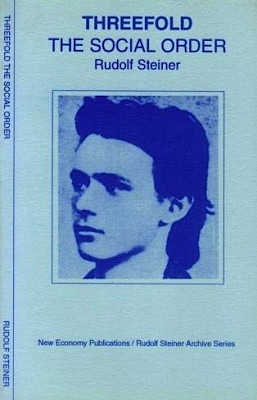
Threefold Social Order & Commonwealth

Threefold Social Order & Commonwealth
Author: Rudolf Steiner  
Language: English


  Social threefolding is a sociological theory suggesting the progressive independence of society's economic, political and cultural institutions.
It aims to foster human rights and equality in political life, freedom in cultural life (art, science, religion, education, the media), and associative cooperation in economic life.
The idea was first proposed by Rudolf Steiner in the great cultural ferment immediately following the end of the First World War.

 The process of achieving the cooperative independence of these three societal realms is meant to be achieved through a gradual transformation of existing societal structures.
Steiner believed that the three social spheres had very gradually, over thousands of years, been growing independent of each other, and would naturally tend to continue to do so, and that consciously furthering aspects of this independence thus works in accordance with society's natural evolution.


Download

The Ego and his own

The Ego and his own
Author: Max Stirner
Language: English


 The Ego and Its Own is an 1844 work by German philosopher Max Stirner. It presents a radically nominalist and individualist critique of Christianity, nationalism and traditional morality on one hand; and on the other, humanism, utilitarianism, liberalism and much of the then-burgeoning socialist movement, advocating instead an amoral (although importantly not inherently immoral or antisocial) egoism. It is considered a major influence on the development of anarchism, existentialism, nihilism and postmodernism.

 The first part of the text begins by setting out a tripartite dialectical structure based on an individual's stages of life (Childhood, Youth and Adulthood).
In the first realistic stage, children are restricted by external material forces.
Upon reaching the stage of youth, they begin to learn how to overcome these restrictions by what Stirner calls the "self-discovery of mind". However, in the idealistic stage, a youth now becomes enslaved by internal forces such as conscience, reason and other 'spooks' or 'fixed ideas' of the mind (including religion, nationalism and other ideologies).
The final stage, 'egoism' sees the now adult individual freed from all internal and external constraints, attaining individual autonomy.


Download   

Philosophy of Freedom

Philosophy of Freedom
Author: Rudolf Steiner
Language: English


 The Philosophy of Freedom is the fundamental philosophical work of the philosopher and esotericist Rudolf Steiner (1861–1925).
It addresses the questions whether and in what sense human beings can be said to be free.
Part One of The Philosophy of Freedom examines the basis for freedom in human thinking, gives an account of the relationship between knowledge and perception, and explores the reliability of thinking as a means to knowledge.


 In Part Two Steiner analyzes the conditions necessary for human beings to be free, and develops a moral philosophy that he describes as "ethical individualism".
The book's subtitle, Some results of introspective observation following the methods of natural science, indicates the philosophical method Steiner intends to follow.


Download

Heaven and Hell

Heaven and Hell
Author: Aldous Huxley
Intro:


 Heaven and Hell is a philosophical essay by Aldous Huxley published in 1956. Huxley derived the title from William Blake's book The Marriage of Heaven and Hell. The essay discusses the relationship between bright, colorful objects, geometric designs, psychoactives, art, and profound experience.
Heaven and Hell metaphorically refer to what Huxley conceives to be two contrary mystical experiences that potentially await when one opens the "doors of perception"—not only in a mystical experience, but in prosaic life.

Huxley uses the term antipodes to describe the "regions of the mind" that one can reach via meditation, vitamin deficiencies, self-flagellation, fasting, or (most effectively, he says) with the aid of certain chemical substances like LSD or mescaline. Essentially, Huxley defines these "antipodes" of the mind as mental states that one may reach when one's brain is disabled (from a biological point of view) and can then be conscious of certain "regions of the mind" that one would otherwise never be able to pay attention to, due to the lack of biological/utilitarian usefulness.


Download

Social Criticism (Britain)

Social Criticism (Britain)
Author: Aldous Huxley
Intro:


Aldous Leonard Huxley was born on July 26, 1894, into a family that included some of the most distinguished members of that part of the English ruling class made up of the intellectual elite. Aldous' father was the son of Thomas Henry Huxley, a great biologist who helped develop the theory of evolution.
His mother was the sister of Mrs. Humphrey Ward, the novelist; the niece of Matthew Arnold, the poet; and the granddaughter of Thomas Arnold, a famous educator and the real-life headmaster of Rugby School who became a character in the novel Tom Brown's Schooldays.

Download

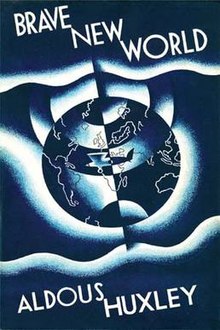
Brave New World

Brave New World
Author: Aldous Huxley
Intro:
 

Brave New World is a dystopian novel written in 1931 by English author Aldous Huxley, and published in 1932. Largely set in a futuristic World State of genetically modified citizens and an intelligence-based social hierarchy, the novel anticipates huge scientific developments in reproductive technology, sleep-learning, psychological manipulation, and classical conditioning that are combined to make a utopian society that goes challenged only by a single outsider.
Huxley followed this book with a reassessment in an essay, Brave New World Revisited (1958), and with Island (1962), his final novel.
 In 1999, the Modern Library ranked Brave New World fifth on its list of the 100 best English-language novels of the 20th century. In 2003, Robert McCrum writing for The Observer included Brave New World chronologically at number 53 in "the top 100 greatest novels of all time", and the novel was listed at number 87 on the BBC's survey The Big Read.

 The novel opens in the World State city of London in AF (After Ford) 632 (AD 2540 in the Gregorian calendar), where citizens are engineered through artificial wombs and childhood indoctrination programmes into predetermined classes (or castes) based on intelligence and labour. Lenina Crowne, a hatchery worker, is popular and sexually desirable, but Bernard Marx, a psychologist, is not. He is shorter in stature than the average member of his high caste, which gives him an inferiority complex.

 His work with sleep-learning allows him to understand, and disapprove of, his society's methods of keeping its citizens peaceful, which includes their constant consumption of a soothing, happiness-producing drug called soma. Courting disaster, Bernard is vocal and arrogant about his criticisms, and his boss contemplates exiling him to Iceland because of his nonconformity. His only friend is Helmholtz Watson, a gifted writer who finds it difficult to use his talents creatively in their pain-free society. 


Download 

Treatise of Human Nature

Treatise of Human Nature
Author: David Hume
Intro:


A Treatise of Human Nature (1738–40) is a book by Scottish philosopher David Hume, considered by many to be Hume's most important work and one of the most influential works in the history of philosophy.
 The Treatise is a classic statement of philosophical empiricism, skepticism, and naturalism. In the introduction Hume presents the idea of placing all science and philosophy on a novel foundation: namely, an empirical investigation into human nature. Impressed by Isaac Newton's achievements in the physical sciences, Hume sought to introduce the same experimental method of reasoning into the study of human psychology, with the aim of discovering the "extent and force of human understanding".
 Against the philosophical rationalists, Hume argues that passion rather than reason governs human behaviour. He introduces the famous problem of induction, arguing that inductive reasoning and our beliefs regarding cause and effect cannot be justified by reason; instead, our faith in induction and causation is the result of mental habit and custom. Hume defends a sentimentalist account of morality, arguing that ethics is based on sentiment and passion rather than reason, and famously declaring that "reason is, and ought only to be the slave to the passions".
Hume also offers a skeptical theory of personal identity and a compatibilist account of free will.

Contemporary philosophers have written of Hume that "no man has influenced the history of philosophy to a deeper or more disturbing degree", and that Hume's Treatise is "the founding document of cognitive science" and the "most important philosophical work written in English." However, the public in Britain at the time did not agree, nor in the end did Hume himself agree, reworking the material in An Enquiry Concerning Human Understanding (1748) and An Enquiry Concerning the Principles of Morals (1751).
In the Author's introduction to the former, Hume wrote:

    “Most of the principles, and reasonings, contained in this volume, were published in a work in three volumes, called A Treatise of Human Nature: a work which the Author had projected before he left College, and which he wrote and published not long after. But not finding it successful, he was sensible of his error in going to the press too early, and he cast the whole anew in the following pieces, where some negligences in his former reasoning and more in the expression, are, he hopes, corrected. Yet several writers who have honoured the Author’s Philosophy with answers, have taken care to direct all their batteries against that juvenile work, which the author never acknowledged, and have affected to triumph in any advantages, which, they imagined, they had obtained over it: A practice very contrary to all rules of candour and fair-dealing, and a strong instance of those polemical artifices which a bigotted zeal thinks itself authorized to employ. Henceforth, the Author desires, that the following Pieces may alone be regarded as containing his philosophical sentiments and principles.”

It contains the following sections:


Book 1: "Of the Understanding"
– An investigation into human cognition. Important statements of Skepticism.

Book 2: "Of the Passions"
– A treatment of emotions and free will.

Book 3: "Of Morals"
– A treatment of moral ideas, justice, obligations, benevolence.


Download 1

Download 2

Download 3


An Essay Concerning Human Understanding

An Essay Concerning Human Understanding
Author: John Lock
Intro:


  An Essay Concerning Human Understanding is a work by John Locke concerning the foundation of human knowledge and understanding.
It first appeared in 1689 (although dated 1690) with the printed title An Essay Concerning Humane Understanding. 

He describes the mind at birth as a blank slate (tabula rasa, although he did not use those actual words) filled later through experience.
The essay was one of the principal sources of empiricism in modern philosophy, and influenced many enlightenment philosophers, such as David Hume and George Berkeley.

Vol 1 to 4 

 Book I
 The main thesis is that there are "No Innate Principles", by this reasoning:
    If we will attentively consider new born children, we shall have little reason to think that they bring many ideas into the world with them and that "by degrees afterward, ideas come into their minds."
 Book I of the Essay is devoted to an attack on nativism or the doctrine of innate ideas; Locke indeed sought to rebut a prevalent view, of innate ideas, that was vehemently held by philosophers of his time.
 Locke allowed that some ideas are in the mind from an early age, but argued that such ideas are furnished by the senses starting in the womb: for instance, differences between colours or tastes.
If we have a universal understanding of a concept like sweetness, it is not because this is an innate idea, but because we are all exposed to sweet tastes at an early age.
 One of Locke's fundamental arguments against innate ideas is the very fact that there is no truth to which all people attest. He took the time to argue against a number of propositions that rationalists offer as universally accepted truth, for instance the principle of identity, pointing out that at the very least children and idiots are often unaware of these propositions.
In anticipating a counter-argument, namely the use of reason to comprehend already existent innate ideas, Locke states, "by this means there will be no Difference between the Maxims of the Mathematicians, and Theorems they deduce from them: All must equally allow’d innate, they being all Discoveries made by the use of reason."

Book II
Whereas Book I is intended to reject the doctrine of innate ideas proposed by Descartes and the rationalists, Book II explains that every idea is derived from experience either by sensation – direct sensory information – or reflection – "the perception of the operations of our own mind within us, as it is employed about the ideas it has got".
 Furthermore, Book II is also a systematic argument for the existence of an intelligent being: "Thus, from the consideration of ourselves, and what we infallibly find in our own constitutions, our reason leads us to the knowledge of this certain and evident truth, that there is an eternal, most powerful, and most knowing being; which whether any one will please to call God, it matters not!" 

Book III
Book 3 focuses on words.
Locke connects words to the ideas they signify, claiming that man is unique in being able to frame sounds into distinct words and to signify ideas by those words, and then that these words are built into language.
 Chapter ten in this book focuses on "Abuse of Words." Here, Locke criticizes metaphysicians for making up new words that have no clear meaning. He also criticizes the use of words which are not linked to clear ideas, and to those who change the criteria or meaning underlying a term.
 Thus he uses a discussion of language to demonstrate sloppy thinking. Locke followed the Port-Royal Logique (1662) in numbering among the abuses of language those that he calls "affected obscurity" in chapter 10. Locke complains that such obscurity is caused by, for example, philosophers who, to confuse their readers, invoke old terms and give them unexpected meanings or who construct new terms without clearly defining their intent. Writers may also invent such obfuscation to make themselves appear more educated or their ideas more complicated and nuanced or erudite than they actually are. 

Book IV
This book focuses on knowledge in general – that it can be thought of as the sum of ideas and perceptions. Locke discusses the limit of human knowledge, and whether knowledge can be said to be accurate or truthful.
 Thus there is a distinction between what an individual might claim to "know", as part of a system of knowledge, and whether or not that claimed knowledge is actual. Locke writes at the beginning of the fourth chapter, Of the Reality of Knowledge): "I doubt not my Reader by this Time may be apt to think that I have been all this while only building a Castle in the Air; and be ready to say to me, To what purpose all of this stir? Knowledge, say you, is only the Perception of the Agreement or Disagreement of our own Ideas: but who knows what those Ideas may be? ... But of what use is all this fine Knowledge of Man's own Imaginations, to a Man that enquires after the reality of things? It matters now that Mens Fancies are, 'tis the Knowledge of Things that is only to be priz'd; 'tis this alone gives a Value to our Reasonings, and Preference to one Man's Knowledge over another's, that is of Things as they really are, and of Dreams and Fancies."
 In the last chapter of the book, Locke introduces the major classification of sciences into physics, semiotics, and ethics. 

An Inquiry Concerning Political Justice and its influences on morals and Happiness

An Inquiry Concerning Political Justice and its influences on morals and Happiness
Author: William Godwin
Intro: Vol1 & 2


Godwin began thinking about Political Justice in 1791, after the publication of Thomas Paine's Rights of Man in response to Edmund Burke's Reflections on the Revolution in France (1790).
However, unlike most of the works that Burke's work spawned in the ensuing Revolution Controversy, Godwin's did not address the specific political events of the day; it addressed the underlying philosophical principles.

 Its length and expense (it cost over £1) made it inaccessible to the popular audience of the Rights of Man and probably protected Godwin from the persecution that other writers such as Paine experienced.
 Nevertheless, Godwin became a revered figure among radicals and was seen as an intellectual leader among their groups.

 One way in which this happened is through the many unauthorized copies of the text, the extracts printed by radical journals, and the lectures John Thelwall gave based on its ideas.
Godwin’s best known work of political theory.

Written in the early years of the French Revolution before the Terror had begun, Godwin provides a devastating critique of unjust government institutions and optimistically proposes that individuals not the state can best provide for their needs.
He believed that political change could best be brought about gradually and as a result of free discussion in small communities. 
This work has inspired many generations of radical thinkers.
VOL 1 & 2


Download 1

Download 2